Paper Packaging: How Supermarket Brands Are Leading the Sustainable Shift
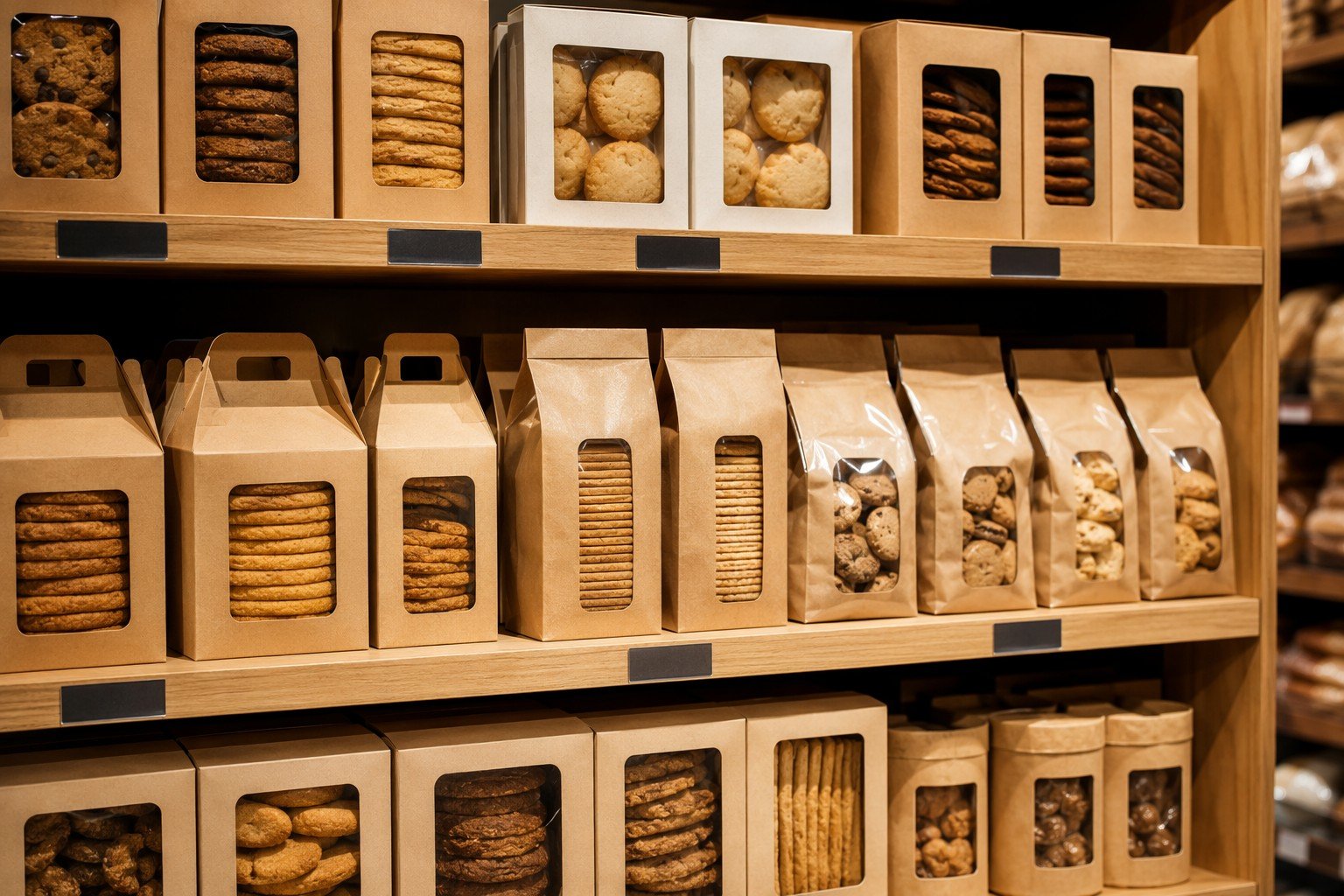
Walk down any supermarket cookie and biscuits aisle in 2026, and one trend is unmistakable: paper packaging has taken over. Where plastic trays and film wraps once dominated, kraft paperboard cartons, window-patched boxes, and paper-based wrappers now fill the shelves. The shift is driven by consumer demand, retailer sustainability mandates, and the simple fact that paper packaging performs as well as plastic — while sending a completely different environmental message.
This article explores how supermarket food brands are leading the adoption of sustainable packaging, what materials and structures they use, and what beauty and D2C brands can learn from the cookie aisle. At NC Packag, we apply the same expertise to beauty, skincare, and subscription brands — from folding cartons to rigid boxes and mailers.
Why Paper Packaging Is Winning on Supermarket Shelves
The supermarket cookie category offers a perfect case study in sustainable packaging adoption. Five years ago, most mid-range cookie brands used plastic trays inside film-wrapped cartons, or all-plastic stand-up pouches. Today, the same category has shifted overwhelmingly to paper-based structures.
Several forces are driving this shift:
- Retailer sustainability scorecards — major supermarket chains now evaluate suppliers on packaging sustainability, and paper scores higher than plastic alternatives
- Consumer preference — 73% of consumers say they would pay more for products in sustainable packaging, and paper is the most recognized sustainable material
- Performance parity — modern paperboard coatings and barrier technologies mean paper packaging now matches plastic for moisture resistance, grease protection, and shelf life
- Recycling infrastructure — paper packaging is curbside recyclable in virtually every municipality, unlike flexible plastic films
- Brand storytelling — the matte texture and natural kraft tones of paper communicate authenticity and craftsmanship
Paper Packaging Structures Used by Supermarket Cookie Brands
Supermarket cookie brands have developed a range of paper packaging formats that balance product protection, shelf visibility, and sustainability. These same structures are directly applicable to beauty, skincare, and D2C brands:
Kraft Paperboard Cartons with Window Patches
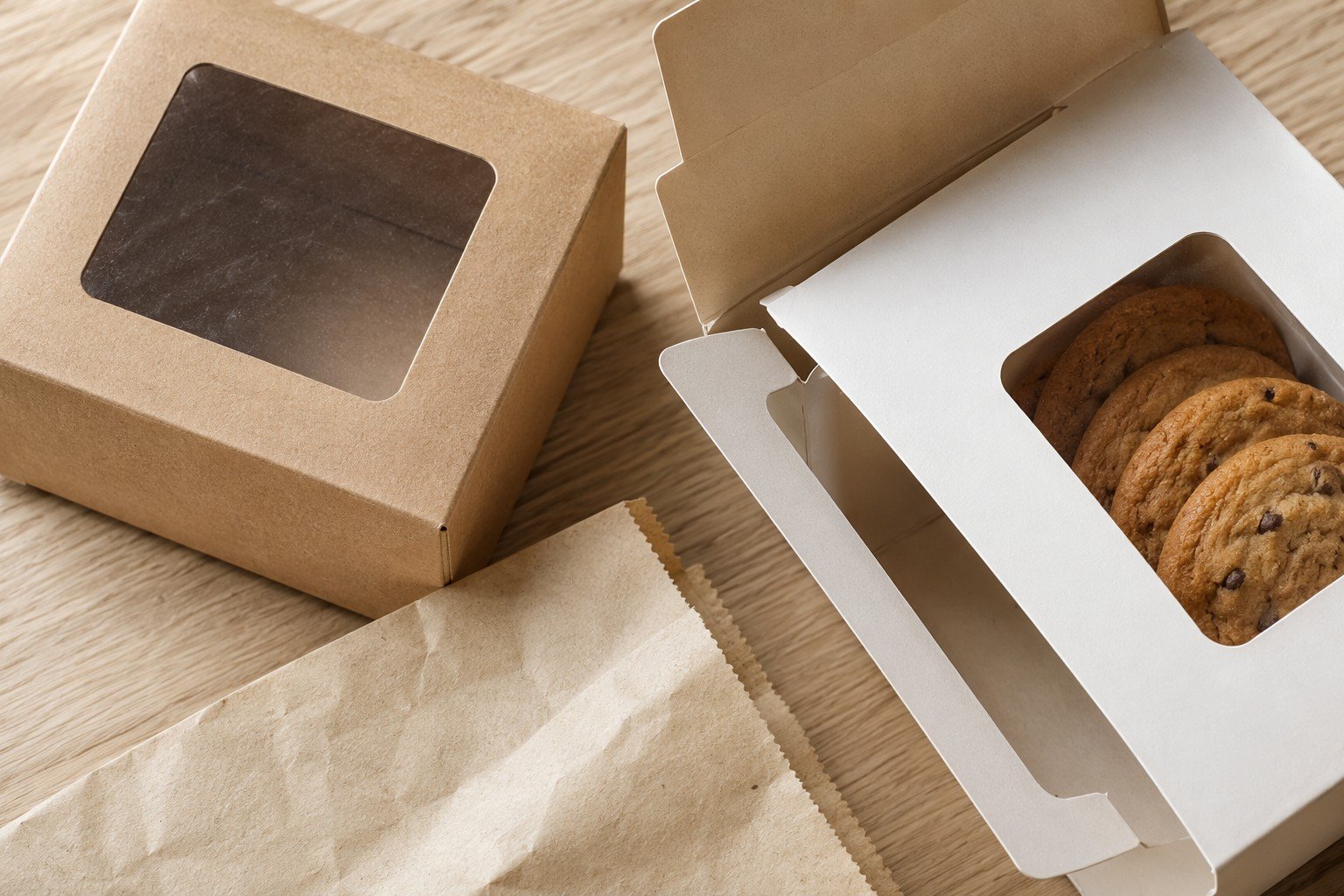
The most visible paper packaging trend on supermarket shelves is the kraft paperboard carton with a transparent window patch. The kraft exterior communicates natural and sustainable values. The window — usually a small die-cut opening covered with a compostable cellulose film or recyclable PET window — lets shoppers see the product inside. This format solves the key tension between sustainability and product visibility.
For beauty brands, the same window-patched approach works well for soap bars, bath products, sheet masks, and solid skincare formats where seeing the product drives purchase confidence.
Matte-Coated Paperboard Cartons
Premium cookie brands often use matte-coated SBS (Solid Bleached Sulfate) paperboard — the same material widely used in beauty and skincare cartons. The coated surface supports high-resolution CMYK printing for brand storytelling, while the matte finish creates a soft, modern aesthetic that photographs well on social media.
Paper-Based Flow Wrappers
One of the most exciting innovations appearing in supermarket biscuit aisles is the paper-based flow wrapper — a replacement for traditional plastic film wrap. These wrappers use thin, flexible paper with a functional coating for moisture and grease resistance. While still an emerging technology, they are growing fast as brands seek to eliminate plastic from single-serve and multi-pack formats.
What Beauty Brands Can Learn from Supermarket Packaging
The packaging revolution in the supermarket cookie aisle holds direct lessons for beauty and D2C brands:
- Natural kraft communicates sustainability instantly — cookie brands have proven that unbleached kraft paper packaging does not look cheap; it looks intentional. Beauty brands can use the same visual cue for clean beauty and natural skincare lines
- Window patches bridge the visibility gap — the biggest barrier to adoption in beauty has been the desire to see the product. A small window patch solves this while keeping the packaging paper-based
- Matte coating elevates print quality — premium cookie cartons deliver exceptional CMYK print results at competitive cost
- Sustainability claims drive purchase decisions — retailers reward brands that use paper packaging with better shelf placement and sustainability badge programs
- Material consistency across SKUs builds brand recognition — when every product uses the same packaging material family, the shelf presence is unified
Sustainable Packaging: Materials and Certifications
Not all paper packaging is equally sustainable. The most credible paper packaging uses verified materials and certifications:
- FSC-certified paperboard — the Forest Stewardship Council certification verifies responsible forest management
- Post-consumer recycled content — paper packaging made with post-consumer recycled fiber directly reduces demand for virgin wood pulp
- Uncoated and unbleached options — kraft paperboard without bleaching or clay coating is the most recyclable format
- Water-based and soy-based inks — fully compatible with paper recycling streams, with lower VOC emissions
- Mono-material design — using a single material type without mixed plastic windows or foil lamination enables easier recycling
Our sustainable packaging guide covers these material choices in more detail for beauty and D2C applications.
Paper Packaging Cost and Performance
A common concern when transitioning to paper packaging is cost. The supermarket cookie category provides useful data points: most brands that switched from plastic to paper packaging did not see a significant cost increase. In many cases, it was cost-neutral or even saved money when the full lifecycle was considered:
| Factor | Plastic Packaging | Paper Packaging |
|---|---|---|
| Material cost per unit | Lower per gram | Slightly higher, but competitive at volume |
| Tooling and setup | Higher die/mold costs | Lower; established technology |
| Recycling cost | Higher (specialized streams) | Lower (curbside in most areas) |
| Retailer compliance | Increasingly restricted | Preferred; may qualify for green shelf programs |
| Consumer perception | Negative (single-use plastic) | Positive; 73% willing to pay more |
Cost can be further optimized through right-sizing, GSM optimization, and quantity planning — techniques we apply in our packaging audit process.
The Future of Paper Packaging
Looking ahead, several trends will accelerate paper packaging adoption across both food and beauty categories:
- Advanced barrier coatings — water-based functional coatings providing moisture, oxygen, and grease resistance without compromising recyclability
- Compostable window films — cellulose-based transparent films replacing petroleum-based windows
- Digital printing on kraft — improved digital print technology produces vibrant color on uncoated kraft paperboard
- Legislation — extended producer responsibility laws and single-use plastic bans create regulatory tailwinds globally
FAQ
Is paper packaging more sustainable than plastic?
Yes, for most applications. Paper is renewable, recyclable in curbside programs, and biodegradable. Plastic is made from fossil fuels and only 9% is ever recycled. The key is to choose FSC-certified or recycled paper and avoid mixed-material structures that complicate recycling.
Does paper packaging protect products as well as plastic?
Yes. Modern paperboard with functional barrier coatings provides excellent moisture, oxygen, and grease resistance. For dry and solid products, paper packaging matches plastic in performance. For liquid formulations, a thin barrier liner or coating is added.
Can paper packaging be used for beauty products?
Absolutely. Folding cartons, rigid boxes, kraft pouches, and mailer boxes are all paper-based formats widely used in beauty. Many of the same materials and structures found in supermarket cookie paper packaging are directly applicable to beauty products.
What MOQ is available for custom paper packaging?
At NC Packag, custom paper packaging starts from 500 pieces depending on structure, material, and finishing requirements. Digital printing makes low-MOQ production accessible for new launches, limited editions, and seasonal products.
Transition Your Brand to Paper Packaging
Whether you are inspired by the supermarket packaging revolution or looking to meet retailer sustainability requirements, NC Packag can help you design and produce paper-based packaging that performs. Our team works with beauty, skincare, food, and D2C brands to develop sustainable packaging solutions from folding cartons and rigid boxes to mailers and pouches — with FSC-certified and recycled material options available from 500 pieces.
Request a paper packaging consultation — share your product details and we will recommend the right material, structure, and finish for your brand.