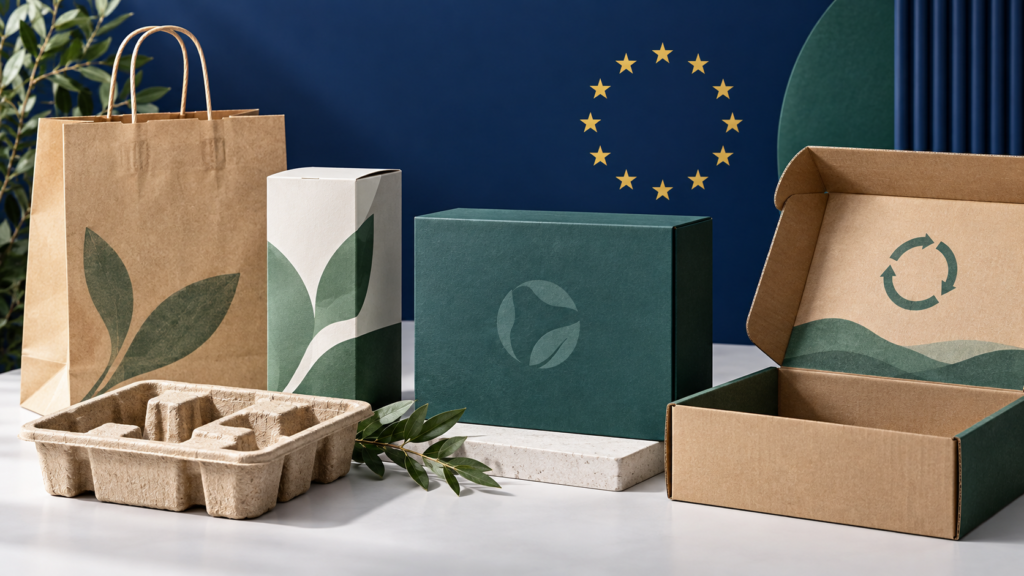
EU PPWR packaging 2026 is now a board-level issue for every D2C brand selling into Europe. The EU Packaging and Packaging Waste Regulation (PPWR) began applying on 12 August 2026, changing how packaging is designed, specified, documented and placed on the European market. For fashion, beauty, food, jewellery and lifestyle brands, the practical goal is clear: use less material, design for recycling, avoid unnecessary empty space and build reliable packaging data into the supply chain.
This practical guide explains what international packaging buyers need to know, what to ask suppliers and how to move toward PPWR-compliant packaging without sacrificing product protection or the customer experience.
EU PPWR Packaging 2026: Quick Answer
The PPWR replaces the previous EU packaging directive with directly applicable rules. It entered into force on 11 February 2025 and applies from 12 August 2026. The regulation introduces packaging minimisation, recyclability, recycled-content, reuse, labelling and producer-responsibility requirements, with major milestones continuing through 2030, 2035 and 2040.
- Start with a packaging audit: document every component, material, weight and coating.
- Reduce complexity: remove unnecessary layers, oversized boxes and difficult-to-separate parts.
- Design for recycling: prefer structures compatible with established collection, sorting and recycling streams.
- Collect evidence: keep supplier declarations, material specifications and certification records.
- Plan by market: national EPR registration and reporting obligations still matter alongside EU-wide rules.
What Is the EU Packaging and Packaging Waste Regulation?
Regulation (EU) 2025/40 covers packaging and packaging waste across the full life cycle. Unlike a directive that must be transposed into national law, an EU regulation applies directly across Member States. Its purpose is to reduce packaging waste, improve circularity and harmonise requirements within the EU single market.
The European Commission’s PPWR overview highlights measures on recyclability, recycled content, waste prevention, reuse and clearer consumer information. The official Regulation (EU) 2025/40 text remains the controlling legal source. Brands should obtain market-specific legal advice for final compliance decisions.
Key PPWR dates packaging buyers should track
| Date | Milestone | Business action |
|---|---|---|
| 11 February 2025 | PPWR entered into force | Begin portfolio mapping and supplier data collection |
| 12 August 2026 | Most provisions begin applying | Use updated specifications and compliance workflows |
| 2030 | Major recyclability, minimisation and recycled-content milestones | Complete redesign of at-risk formats before launch cycles |
| 2035 | Recyclability at scale becomes central | Confirm that formats work in real collection and recycling systems |
| 2040 | Further waste-reduction and recycled-content targets | Build long-term circular packaging roadmaps |
For teams translating EU PPWR packaging 2026 into a supplier brief, each legal milestone should be mapped to product development, artwork and launch calendars.
Why EU PPWR Packaging 2026 Matters to Global D2C Brands
PPWR is not only a sustainability topic. It affects landed cost, packaging development time, online fulfilment, retail acceptance and the evidence a brand may need to provide. Packaging that looks sustainable but is difficult to sort or recycle can create regulatory and reputation risk.
D2C brands face a specific challenge: their packaging often serves as a shipping container, product protector and marketing experience at the same time. A premium unboxing experience may include a rigid box, sleeve, insert, tissue, ribbon, card and mailer. Each additional component can increase material use and complicate separation. The strongest response is not to remove branding; it is to engineer the experience more intelligently.
A structural redesign can sometimes reduce board area, eliminate a plastic insert, lower shipping weight and keep the same visual impact. This is why packaging compliance should be addressed before artwork approval rather than added as a final checklist.
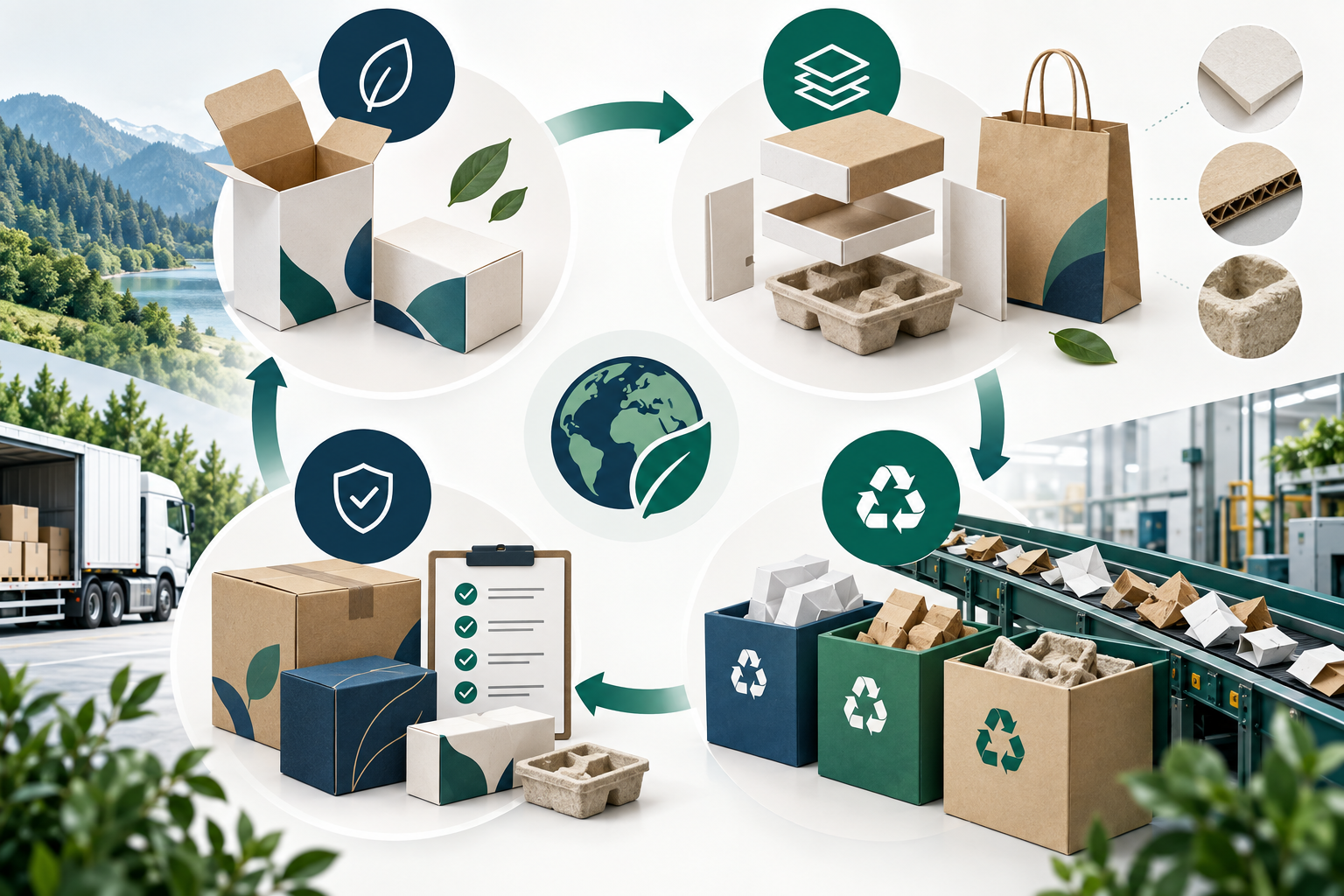
Seven Requirements That Should Shape Packaging Specifications
1. Packaging minimisation and right-sizing
An EU PPWR packaging 2026 audit should compare every component with the protection and communication function it actually performs.
The PPWR aims to prevent avoidable packaging. Buyers should challenge oversized gift boxes, excessive void fill, decorative false bottoms and double packaging that does not provide a clear protection function. E-commerce packaging also faces empty-space considerations. A right-sized structure begins with accurate product dimensions, fragility, distribution testing and realistic pack-out requirements.
For shipping applications, a properly engineered custom corrugated box can improve protection while reducing void fill and dimensional weight. For lightweight retail products, a compact folding carton may provide a lower-material alternative to a rigid construction.
2. Recyclability by design
In EU PPWR packaging 2026 planning, recyclability decisions should be made at the structure stage, before materials and finishes are locked.
All packaging placed on the EU market is expected to move toward recyclable design, with performance grades and phased requirements from 2030. A theoretical claim is not enough. Material combinations, inks, adhesives, coatings, closures and inserts can affect whether a pack is collected, sorted and recycled in practice.
Paper-based packaging generally benefits from established recycling infrastructure, but buyers should still examine laminates, metallic films, magnets, foam, heavy adhesive coverage and permanently bonded mixed materials. Where premium finishes are required, ask whether a lower-impact alternative can deliver a comparable result.
3. Recycled content in plastic packaging
The PPWR introduces minimum recycled-content requirements for certain plastic packaging categories, with targets varying by format and date. Brands using plastic mailers, windows, trays or protective components should identify the polymer, recycled-content percentage and supporting documentation. PCR claims should be traceable and should not be confused with broad, unsupported “eco-friendly” language.
For applications where paper is technically suitable, moulded fibre or paperboard inserts may reduce reliance on virgin plastic. Where plastic remains necessary for barrier, safety or durability, the goal should be a clearly specified, efficiently used and appropriately documented material.
4. Reuse targets and transport packaging
Reuse requirements affect selected packaging categories and are especially relevant to transport and grouped packaging. A reusable solution must survive multiple cycles and operate within a practical return, cleaning and redistribution system. Simply making a package durable does not automatically create an effective reuse model.
Brands should separate consumer presentation packaging from B2B transport packaging during analysis. Reusable totes, pallets or transit systems may offer opportunities even when primary packaging remains single-use.
5. Harmonised labelling and digital information
The regulation supports clearer, harmonised sorting information and includes provisions for digital information in certain contexts. Packaging artwork systems should reserve space for future label requirements and allow efficient regional updates. QR codes can support instructions, material details and multilingual information, but digital content must be maintained and should not replace mandatory physical information where physical labelling is required.
6. Restricted substances and safer chemistry
PPWR includes restrictions for substances of concern, including limits relating to PFAS in food-contact packaging. Food, cosmetics and personal-care brands should request documented information about coatings, grease barriers, inks and adhesives. The European Chemicals Agency’s PPWR guidance is a useful official reference for the regulation’s chemical-safety dimension.
7. Extended Producer Responsibility and data quality
Extended Producer Responsibility (EPR) makes producers responsible for packaging placed on a market. Registration, reporting categories and fees remain connected to national systems. Accurate packaging data therefore has financial value. A bill of materials should record component name, material family, weight, recycled content, certification status and disposal route.
Incomplete data creates delays when a distributor, marketplace, retailer or compliance partner asks for evidence. Building a standard supplier-data template now is one of the fastest ways to reduce future compliance friction.
PPWR-Compliant Packaging: Material Strategy by Format
A strong EU PPWR packaging 2026 material strategy evaluates the complete pack rather than judging one material in isolation.
| Packaging format | Design opportunity | Points to verify |
|---|---|---|
| Folding cartons | Lightweight, flat-shipped and widely recyclable | Board source, coating, window material, adhesive and ink coverage |
| Rigid gift boxes | Premium presentation with long-use potential | Magnets, foam, fabric, laminated wraps and component separation |
| Corrugated mailers | Protection and shipping in one structure | Right-sizing, recycled fibre, print coverage and void fill |
| Paper bags | Renewable fibre and strong brand visibility | Handle type, lamination, wet strength and certified paper options |
| Moulded fibre inserts | Paper-based alternative for product protection | Fit, drop performance, surface finish and local recyclability |
| Plastic mailers | Low weight and moisture resistance | Polymer type, recycled content, closures, labels and collection route |
There is no universally “best” material. The best specification balances product protection, total material use, transport efficiency, recycling infrastructure, cost and regulatory evidence. A damaged product usually carries a much larger environmental and financial cost than a modest amount of correctly engineered protective packaging.
How Beauty, Fashion, Food and Jewellery Brands Should Respond
EU PPWR packaging 2026 affects each sector differently because product protection, barrier and presentation requirements vary.
Beauty and fragrance
Cosmetic and perfume packs often use rigid boxes, foam inserts, metallised finishes and multiple decorative components. Begin by testing paperboard or moulded pulp inserts, removable fitments and lower-impact finish combinations. Protecting glass bottles remains essential, so material reduction must be validated through sampling and transit testing.
Fashion and accessories
Fashion brands can examine right-sized mailers, recycled-content tissue, recyclable paper bags and reusable transport packaging. Avoid automatically placing a retail box inside an oversized shipping box. A well-designed direct-mailer structure can combine protection and brand presentation.
Food and beverage
Food-contact compliance, barrier performance, shelf life and restricted substances require careful supplier documentation. Do not replace a proven barrier material based only on appearance. Material changes should be reviewed through food-contact, migration, performance and end-of-life requirements.
Jewellery and premium gifting
Small luxury packs can have a high packaging-to-product ratio. Compact structures, fibre-based inserts and removable decorative elements can reduce complexity while preserving perceived value. Explore the design options available for custom rigid boxes before finalising dimensions and accessories.
An Eight-Step EU PPWR Packaging 2026 Checklist
Use this EU PPWR packaging 2026 checklist when reviewing new launches and existing packaging portfolios.
- Map the portfolio. List every SKU and every primary, secondary, e-commerce and transport packaging component.
- Create a bill of materials. Record dimensions, weight, material, recycled content, coating, ink, adhesive and certification status.
- Identify high-risk formats. Prioritise oversized packs, mixed-material laminates, permanent magnets, foam inserts and difficult-to-separate components.
- Audit empty space. Compare internal volume with the product and protection actually required.
- Redesign for separation. Simplify structures and make different material components easy for consumers or operators to separate.
- Validate performance. Complete prototypes, fit checks, compression or drop tests appropriate to the distribution channel.
- Collect supplier evidence. Request material specifications, recycled-content declarations, certifications and applicable test reports.
- Review claims and artwork. Use precise, verifiable language and prepare space for market-specific sorting or compliance information.
Common PPWR Packaging Mistakes to Avoid
- Replacing plastic without performance testing. A paper alternative that causes leakage or breakage is not a successful redesign.
- Assuming kraft colour means recyclable. Visual cues do not prove material composition or recycling compatibility.
- Counting every durable box as reusable. Reuse requires a functioning system and evidence of multiple rotations.
- Ignoring small components. Windows, labels, ribbons, closures, magnets and inserts can change the end-of-life outcome.
- Waiting until artwork is complete. Structural and material decisions should be resolved before final graphics.
- Using vague environmental claims. Claims such as “green” or “planet-friendly” should be replaced with specific, supportable facts.
How NC Packag Supports Sustainable Packaging Development
For EU PPWR packaging 2026 projects, NC Packag helps international D2C brands turn packaging goals into manufacturable specifications. Through access to 50+ vetted factory partners, we coordinate packaging audits, structural design, material comparison, sampling, cost optimisation, quality control and supply-chain management.
Our role is not to provide legal certification. We help brands develop clearer specifications and obtain relevant manufacturing documentation for review by their internal or external compliance specialists. Depending on the project, options may include FSC-certified paper, recycled-content board, right-sized corrugated structures, moulded pulp inserts, water-based coatings and efficient flat-shipped cartons.
Explore our custom packaging services, or review custom paper bags, folding cartons, corrugated packaging and rigid gift boxes for your next project.
Prepare Your Packaging Portfolio for PPWR
Share your product dimensions, target market, order quantity, current packaging and sustainability requirements. Our team can compare structures, materials and manufacturing routes before sampling.
Frequently Asked Questions
When did the EU PPWR start applying?
Regulation (EU) 2025/40 entered into force on 11 February 2025 and, as a general rule, applies from 12 August 2026. Important technical requirements and targets are phased, with major milestones in 2030, 2035 and 2040.
Does PPWR apply to non-EU packaging suppliers?
The obligations relate to packaging placed on the EU market. A supplier outside the EU may not be the legally responsible economic operator, but its material data, design decisions and documentation can be essential to the importer or brand responsible for compliance.
Must all packaging be recyclable by 2030?
The PPWR establishes recyclability requirements and performance grades that phase in from 2030, subject to detailed rules, exemptions and implementation measures. Brands should begin redesigning difficult formats well before 2030.
Are paper boxes automatically PPWR compliant?
No. Paper is widely collected, but coatings, laminations, windows, adhesives, magnets, foam and other bonded components can affect recyclability and material reporting. Compliance must be assessed for the finished packaging system.
Does FSC certification prove PPWR compliance?
No. FSC certification supports responsible fibre sourcing and chain-of-custody claims. It does not by itself demonstrate compliance with all PPWR requirements such as minimisation, recyclability, labelling, recycled content or EPR reporting.
What should a brand send for a packaging audit?
Provide product dimensions, current dielines or samples, material specifications, component weights, annual quantities, target EU markets, distribution method, artwork requirements and any existing sustainability or compliance documents.
Final Takeaway
EU PPWR packaging 2026 turns sustainable packaging from a broad ambition into a structured design and data challenge. Brands that audit early can reduce material, simplify sourcing, prepare better evidence and avoid expensive last-minute redesigns. The most effective route is cross-functional: packaging, procurement, sustainability, logistics, marketing and compliance teams should review each format together.
Updated September 2026. This article provides general packaging information and is not legal advice. Always review the final specification with qualified compliance professionals for each market and product category.